Why Automation Systems Are Essential for Competitive Manufacturing in Canada
Canada’s manufacturing sector has never had the luxury of competing on low labour cost alone. That reality has shaped the way strong manufacturers in this country think about investment, process control, and capacity planning. If you are building in Ontario, Alberta, Quebec, or the Prairies, you are dealing with higher wages than many offshore markets, long shipping distances between facilities and customers, strict safety obligations, volatile energy costs, and a labour market that rarely supplies enough skilled people at the exact moment you need them. Under https://felixkhra956.rivetgarden.com/posts/industrial-automation-canada-what-to-know-before-upgrading-your-plant those conditions, automation systems are not a futuristic upgrade. They are part of the basic operating model for staying competitive.
That point becomes obvious on the plant floor. A line that depends too heavily on manual intervention can still produce quality goods, but it usually does so with more variation, more overtime, more rework, and less confidence in delivery dates. By contrast, a well-designed automated process creates repeatability. It helps a manufacturer quote lead times more accurately, run tighter tolerances, capture production data in real time, and keep output moving even when hiring is difficult. The companies that understand this tend to view manufacturing automation not as a single equipment purchase, but as a practical strategy for protecting margin and earning customer trust.
The Canadian cost structure leaves little room for inefficiency
Manufacturers in Canada operate in a demanding cost environment. Labour is expensive, especially for licensed trades, controls specialists, millwrights, maintenance technicians, and experienced machine operators. The shortage is not only about wage rates. It is also about availability. Many facilities can win new business and still struggle to add shifts because they cannot find enough qualified people to staff them.
That matters because manual production systems often hide costs in places finance teams do not always see clearly at first. Scrap, line stoppages, changeover delays, injury risk, inconsistent cycle times, and overtime premiums can eat away at profitability far faster than expected. When those losses pile up across several work cells, a plant can look busy while underperforming.
Industrial automation canada projects often begin with exactly this problem. A company may not be trying to become a fully lights-out facility. More often, it is trying to remove avoidable labour content from repetitive tasks, stabilize output, and free up skilled employees for work that genuinely needs judgment. A packaging line that once needed four people may run with two after a pick-and-place robot, integrated vision, and better conveyor logic are installed. The headcount reduction is only part of the gain. The larger benefit is that the line runs at a more consistent pace, and the people who remain are less likely to spend a full shift correcting jams or compensating for poor machine coordination.
In Canadian manufacturing, consistency is often worth more than raw speed. A plant that promises a major customer a weekly shipment cannot afford unpredictable downtime. One missed truck can affect inventory at a distribution centre, strain a customer relationship, and trigger costly recovery measures. Automation systems reduce those risks by making performance measurable and repeatable.
Labour shortages make automation a practical response, not a trend
Ask plant managers what keeps them up at night, and many will mention staffing before they mention machinery. It is hard to run a profitable operation when absenteeism, turnover, or retirements leave critical positions open. Some plants cope by cross-training aggressively. Some raise wages. Some limit growth because they do not believe they can support more production. None of those responses fully solves the issue.
Factory automation changes the equation. It does not eliminate the need for people, but it changes where people create value. Repetitive loading, palletizing, inspection, dispensing, labelling, fastening, and material handling tasks are often good candidates for automation because they consume labour without requiring much judgment. When those tasks are automated, the workforce can shift toward setup, troubleshooting, preventive maintenance, quality assurance, programming, and continuous improvement.
This matters especially in Canada, where an experienced employee on the floor may carry years of hard-earned process knowledge. Losing that person to retirement without capturing their expertise can damage throughput for months. Modern automation can preserve some of that knowledge by embedding process parameters, alarm logic, standard recipes, and documented workflows into the equipment itself. A seasoned operator once adjusted a line by instinct. A properly engineered control system turns that instinct into repeatable logic that newer employees can work with.
There is a common fear that automation displaces workers in a blunt, one-directional way. In practice, many Canadian plants are not replacing fully staffed teams. They are trying to keep production running despite open positions. One food processor I encountered had invested in end-of-line automation after failing to staff weekend palletizing for months. The system did not trigger layoffs. It prevented production bottlenecks and reduced the need to pull trained operators away from upstream work.
Quality control is where automation often pays for itself fastest
Many investment discussions start with labour savings, but quality is frequently the stronger financial argument. In sectors such as food and beverage, pharmaceuticals, automotive, aerospace, fabricated metals, and consumer packaged goods, variation is expensive. A process that drifts slightly out of tolerance can create rework, warranty claims, or complete batch loss.
Automation systems help by making key variables stable and visible. Sensors, servo controls, machine vision, and programmable logic controllers can monitor dimensions, fill levels, torque, temperature, pressure, and position in real time. Instead of finding defects after the fact, the system can reject, correct, or stop the process before bad product multiplies.
The practical benefit is not only lower scrap. It is also faster root-cause analysis. If a line generates a quality issue at 2:17 p.m., a connected automated system can often show what changed. Maybe a feeder misaligned, a temperature zone drifted, or a pneumatic actuator slowed. Without that data, supervisors are left reconstructing events from memory, and that usually means longer downtime and less confidence in the fix.
Canadian manufacturers that serve regulated or high-spec markets gain another advantage here. Traceability is easier when production events are captured automatically. For businesses supplying parts into larger industrial, medical, or transportation ecosystems, that traceability can be the difference between winning and losing contracts. Buyers increasingly expect process discipline, not just acceptable final parts.
Energy, waste, and throughput all improve when processes become visible
Plants often underestimate how much waste comes from poor process visibility. Air leaks, idle conveyors, oversized motors, unnecessary rework loops, and excessive dwell times rarely announce themselves in financial statements with a bright label. They show up as disappointing margins, high utility bills, and unexplained production drag.
Industrial automation solutions bring these losses into the open. A system that tracks cycle time by station, motor load, reject rate, temperature variance, and stoppage duration gives managers a factual basis for improvement. That is especially important in Canada, where energy costs and carbon considerations increasingly shape operating decisions and customer expectations.
Throughput gains do not always come from making equipment run faster. In many plants, the smarter move is to reduce the small interruptions that erode productive time. A line may be rated for a certain output on paper but never reach it because operators spend too much time clearing faults, waiting for upstream product, or adjusting settings between runs. Automation can coordinate line speeds, improve buffering, automate changeovers, and standardize machine recipes so that production does not depend on who is on shift.
These gains can be modest on a single machine and still transformative across a plant. If a system removes three minutes of disruption every hour, over multiple shifts that adds up quickly. When margins are tight, those recovered minutes matter.
Canadian geography rewards resilient, data-driven operations
Manufacturing in Canada comes with logistical realities that companies in denser markets do not face in the same way. Facilities may be far from major ports, component suppliers, service technicians, or end customers. Weather can interfere with transportation. Spare parts can take time to arrive. Plants serving national markets often need high reliability because replacing lost production at short notice is difficult.
Automation systems support resilience in that environment. Remote monitoring, secure diagnostics, alarm history, and condition-based maintenance make it easier to identify trouble early and reduce emergency callouts. If a technician can log in securely, review system status, and guide a local team through a correction, downtime drops. That capability is particularly valuable for facilities outside major urban centres, where specialized support is not always an hour away.
There is also a planning advantage. Plants with solid production data can make better decisions about stocking, scheduling, and maintenance windows. They can see which assets constrain output, which shifts underperform, and which products disrupt flow. Without reliable data, managers often default to intuition. Intuition has value, but in a multi-line plant with tight delivery requirements, it is not enough.
Customers now expect more than capacity, they expect control
Procurement teams are more demanding than they were a decade ago. Price still matters, but so do delivery reliability, traceability, responsiveness, and quality assurance. Large customers want suppliers that can scale without losing control. They want confidence that a surge order will not break the process.
This is one reason manufacturing automation has become a competitive signal as much as an internal efficiency tool. A manufacturer that can demonstrate controlled processes, digital production records, disciplined inspection, and standardized operating logic looks more dependable to customers. That credibility matters in bid reviews, supplier audits, and long-term partnership discussions.
For export-oriented Canadian manufacturers, the bar is even higher. Competing against U.S., European, and Asian producers means proving that higher unit costs are offset by reliability, engineering depth, and product consistency. Automation helps make that case. It shows that the plant is not dependent on manual heroics to meet specification and schedule.
The strongest automation projects start with process, not hardware
A common mistake is to treat automation as a shopping exercise. Companies compare robots, sensors, HMIs, and software before they have clearly defined the production problem. That is how plants end up with expensive equipment wrapped around a weak process.
The better approach starts with the bottleneck. Where does flow break down? What causes variation? Which manual tasks create the most cost, strain, or delay? Where is quality lost? Once those questions are answered, the right industrial automation solutions become easier to specify.
Sometimes the answer is sophisticated. A high-mix assembly process may need vision-guided robotics, recipe management, and traceability integration. Sometimes the answer is modest. A reliable parts feeder, a torque monitoring station, and a smarter reject mechanism may solve most of the problem. Good engineering judgment matters because over-automation can be almost as costly as under-automation. A system should fit the product mix, maintenance capability, and growth plans of the business.
Retrofitting older equipment is often part of the picture in Canada. Many plants run assets that are mechanically sound but digitally outdated. Replacing an entire line is not always necessary. Controls modernization, sensor upgrades, safer guarding, variable frequency drives, and data collection layers can extend useful life and improve performance without the disruption of a full replacement. I have seen plants gain major improvements from relatively focused upgrades, especially when they already had good core machinery.

Integration is where value is either unlocked or lost
Buying an automated machine is one thing. Making it work smoothly with the rest of the plant is another. Integration is often the difference between a system that looks impressive during acceptance testing and one that delivers financial return six months later.
An automated cell has to fit real production life. It must handle part variation, upstream inconsistency, maintenance access, cleaning requirements, operator interaction, and line balancing. It should pass usable data to supervisors and, where appropriate, to ERP or MES systems. Alarm messages need to be meaningful. Changeovers must be practical. Safety should be designed in from the beginning rather than layered on after the fact.
This is where experienced teams earn their keep. The best factory automation projects involve operations, maintenance, engineering, quality, and production leadership early enough to identify friction points before installation. Operators often know exactly which jams, reaches, workarounds, and timing issues will frustrate a new system. Ignoring that knowledge is expensive.
A strong integrator or in-house automation team will also think beyond launch. Spare parts strategy, technician training, backup protocols, documentation quality, and remote support all affect long-term performance. Plants that skip these details sometimes discover that a good machine becomes a fragile dependency because only one person understands how to keep it running.
Safety and ergonomics are business issues, not side benefits
Automation discussions tend to focus on efficiency, but safety and ergonomics deserve equal attention. Repetitive lifting, awkward reaches, sharp tools, hot surfaces, and fast manual motions create injury risk that adds direct and indirect cost. Lost-time incidents, modified duties, turnover, and compensation claims all affect performance.
Automation systems can reduce exposure significantly. Palletizing, depalletizing, welding, cutting, dispensing, and repetitive assembly tasks are obvious examples. Even semi-automated fixtures that improve positioning and reduce force can make a meaningful difference. In many plants, some of the best returns come from eliminating the jobs that people dread most, not from chasing the highest theoretical cycle speed.
This also affects retention. A cleaner, safer, more controlled workplace is easier to staff. That matters in Canadian labour markets where experienced employees have options.
The return on investment is broader than many business cases show
When companies calculate return on automation, they often focus on direct labour reduction because it is easy to model. That is a start, but it is incomplete. The real return usually includes higher uptime, lower scrap, fewer injuries, better scheduling reliability, stronger customer retention, more usable production data, and reduced dependence on hard-to-fill roles.
A realistic business case often weighs several factors at once:
- Labour hours removed from repetitive work
- Scrap and rework reduction
- Throughput increase from fewer micro-stoppages
- Quality and traceability gains that protect revenue
- Avoided overtime and easier staffing
That wider view matters because some projects look marginal under a narrow labour-only analysis and clearly worthwhile once quality and delivery performance are included. It also prevents disappointment. A system may not cut headcount dramatically, yet still pay back well because it unlocks capacity the plant could not otherwise use.
What competitive manufacturers in Canada are doing differently
The manufacturers pulling ahead are rarely the ones making the loudest claims. More often, they are steadily modernizing line by line, targeting their weakest processes first, and building internal capability as they go. They use automation systems to solve specific operational problems, then connect those improvements to broader production strategy.
They also accept that automation is not a single capital event. It is an operating discipline. It requires maintenance maturity, controls standards, cybersecurity awareness, and a willingness to use data for decision-making. Plants that treat the project as finished once the machine starts tend to leave value on the table. Plants that review performance, refine programs, train staff, and standardize lessons across facilities usually see much stronger returns.
For Canadian manufacturers, this mindset is especially important. The country has deep strengths in engineering, specialized production, food processing, resource-linked manufacturing, and advanced fabrication. Those strengths can support excellent margins and durable customer relationships, but only when operations are controlled enough to deliver consistently. Industrial automation canada investment is one of the clearest ways to build that control.
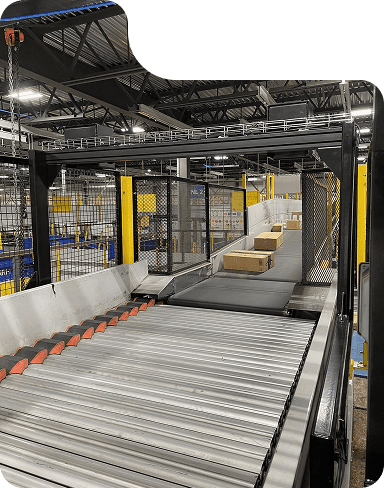
There will always be facilities where a highly manual approach still fits, particularly in very low-volume, highly custom work. But for most producers trying to compete on quality, delivery, safety, and cost at the same time, automation systems are no longer optional. They are part of the foundation. They let Canadian manufacturers do what they have always needed to do best, produce at a high standard, adapt quickly, and make every labour hour and machine hour count.
Sync Robotics Inc. — Business Info (NAP)
Name: Sync Robotics Inc.Address: 2-683 Dease Rd, Kelowna, BC V1X 4A4
Phone: +1-250-753-7161
Website: https://www.syncrobotics.ca/
Email: [email protected]
Sales Email: [email protected]
Hours:
Monday: 8:00 AM – 4:30 PM
Tuesday: 8:00 AM – 4:30 PM
Wednesday: 8:00 AM – 4:30 PM
Thursday: 8:00 AM – 4:30 PM
Friday: 8:00 AM – 4:30 PM
Saturday: Closed
Sunday: Closed
Service Area: Kelowna, British Columbia and across Canada
Open-location code (Plus Code): VHWR+PQ Kelowna, British Columbia
Map/listing URL: https://maps.app.goo.gl/xwtV2wEu8ZuKH3se8
Embed iframe:
Socials (canonical https URLs):
LinkedIn: https://www.linkedin.com/company/syncrobotics/
Instagram: https://www.instagram.com/syncrobotics/
Facebook: https://www.facebook.com/syncrobotics/
https://www.syncrobotics.ca/
Sync Robotics Inc. is an industrial robot and controls integration company based in Kelowna, British Columbia.
The company designs and deploys automation solutions for manufacturing operations across Canada.
Services include industrial robotics integration, controls integration, automation system design, deployment support, and related manufacturing automation solutions.
Sync Robotics Inc. is located at 2-683 Dease Rd, Kelowna, BC V1X 4A4.
To contact Sync Robotics Inc., call +1-250-753-7161 or email [email protected].
For sales inquiries, email [email protected].
Hours listed are Monday to Friday 8:00 AM–4:30 PM, with Saturday and Sunday closed.
For directions and listing details, use the map listing: https://maps.app.goo.gl/xwtV2wEu8ZuKH3se8
Popular Questions About Sync Robotics Inc.
What does Sync Robotics Inc. do?Sync Robotics Inc. designs and deploys industrial robot and controls integration solutions for manufacturing operations.
Where is Sync Robotics Inc. located?
Sync Robotics Inc. is located at 2-683 Dease Rd, Kelowna, BC V1X 4A4.
Does Sync Robotics Inc. serve clients outside Kelowna?
Yes—Sync Robotics Inc. is based in Kelowna, British Columbia and serves clients across Canada.
What are Sync Robotics Inc.’s hours?
Monday–Friday: 8:00 AM–4:30 PM; Saturday and Sunday closed.
How can I contact Sync Robotics Inc.?
Phone: +1-250-753-7161
General Email: [email protected]
Sales Email: [email protected]
Website: https://www.syncrobotics.ca/
Map: https://maps.app.goo.gl/xwtV2wEu8ZuKH3se8
LinkedIn: https://www.linkedin.com/company/syncrobotics/
Instagram: https://www.instagram.com/syncrobotics/
Facebook: https://www.facebook.com/syncrobotics/
Landmarks Near Kelowna, BC
1) Kelowna International Airport2) UBC Okanagan
3) Rutland
4) Orchard Park Shopping Centre
5) Mission Creek Regional Park
6) Downtown Kelowna
7) Waterfront Park